CSRD Is a Data Project Wearing a Reporting Deadline
CSRD requires hundreds of ESG data points from across the business, and in most organizations that data doesn’t yet exist in clean, structured form. The work pulls in finance, legal, HR, procurement, IT and operations at the same time. First-wave filers consistently reported the same surprises: the double materiality assessment consumed far more resource than planned, auditors asked harder questions about data lineage than expected, and iXBRL tagging turned out to need dedicated tooling or a specialist partner — discovered too late to plan around.
Meanwhile the market has crowded. Pure-play ESRS specialists, climate platforms, ERP extensions and financial reporting suites are all selling into the same buying committee, and most of them can produce a demo that looks convincing. The differences that matter show up later: whether the platform can actually run a double materiality assessment or only import one, whether XBRL tagging is native or handed to a partner, and whether a contributor who logs in twice a year can complete a data request without training.
Most sustainability teams don’t get the time to map that landscape before procurement starts. This guide does it for you. Use it to build your shortlist, structure your vendor questions, and walk into demos knowing what to look for.
What’s Inside the CSRD Software Buyer’s Guide?
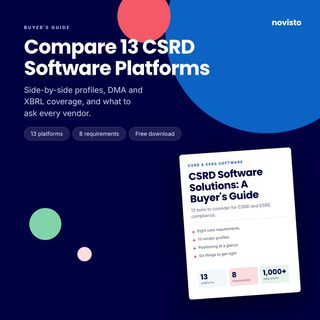
Our guide is an 18-page visual resource, not a wall of text. Keep it open while you evaluate, and share it with everyone on your selection committee.
Inside, you’ll uncover:
Eight Requirements That Actually Shape the Shortlist
Data collection across departments, double materiality, audit trails, iXBRL tagging, multi-framework mapping, integrated carbon and risk, performance tracking, and the flexibility to absorb whatever comes after CSRD.
Thirteen Vendor Profiles, Side by Side
Novisto, Plan A, IBM Envizi, SAP, CCH Tagetik, Position Green, Salesforce Net Zero Cloud, Microsoft, Sphera, Coolset, Workiva, osapiens and Watershed — each with features, best fit, and what to watch for, sourced from public vendor documentation and analyst coverage.
Positioning at a Glance
Two reference tables covering primary strength and best-fit profile, plus where each platform lands on double materiality and XBRL tagging — the two capabilities buyers most often discover too late.
Six Things to Get Right Before You Buy
From leading with data architecture instead of report output, to the questions that reveal how a vendor really handles assurance, XBRL and the people who’ll actually use the tool.