Novisto Sustainability forum 2026
Owning the Outcome
Thursday, November 5th, 2026
Maison Alcan, 1188 Sherbrooke St W
George Serafeim
We're proud to announce George Serafeim as our Keynote Speaker. George is the Charles M. Williams Professor of Business Administration at Harvard Business School, where he teaches finance, governance, and leadership in MBA and executive education programs. He is known for pioneering work in impact accounting, sustainability, and purpose-driven business, including the Impact-Weighted Accounts Project and research on the energy transition and generative AI.
Shaping and Guiding the Conversation
Our Co-Chairs are respected sustainability leaders and long-time members of the Forum community. Their experience and perspectives are helping to shape this year's agenda, to guide discussions, and ensure the event addresses the most pressing issues facing sustainability leaders today.
A unified community—in action
The case for sustainability no longer needs to be made. The real test, as the political and economic landscape shifts, is whether sustainability remains embedded where the toughest business decisions are made: capital allocation, enterprise risk, executive compensation, and procurement.
The 2026 Forum brings together leaders who have successfully kept sustainability at the center of those conversations despite growing headwinds.
Event Schedule
Agenda
This invite-only event will be delivered via Chatham house rules meaning that you will have exclusive access to the candid thoughts of ESG practitioners and global regulators.
8:00 - 9:00 AMNetworking Breakfast and Registration
Opening Address

Charles Assaf
Founder & CEO, Novisto

Laurent L'Hopitallier
Head of ESG Performance, Sanofi
Purpose in Practice: An Evidence-Based Playbook for Long-Term Value Creation
Read moreRead less
What are the fundamentals of a winning organization? Drawing on two decades of research Professor George Serafeim argues that winning organizations practice eight disciplines: they build purpose their people actually believe; pair it with clarity of direction; focus on the few issues that truly drive value; set targets ambitious enough to force invention; hardwire commitments into governance and incentives; balance long-term vision with short-term execution; communicate with simplicity; and exhibit the courage to act before it pays. Firms practicing these disciplines delivered significantly higher value than their peers. All eight disciplines have tremendous implications for sustainability leaders inside organizations. This keynote gives business leaders an evidence-based playbook for winning with purpose: competing fiercely, scaling what works, and solving what matters.

George Serafeim
Charles M. Williams Professor of Business Administration, Harvard Business School
10:30 - 10:45 AMMusic Performance & Break
Unlocking Business Value Through Sustainability: Case Studies from Nexans and Granite Construction
Read moreRead less
How do leading enterprises translate sustainability strategies into measurable, bottom-line impact? It starts by moving beyond compliance and embedding ESG insights directly into core decision-making.
In this deep-dive panel, leaders from Nexans and Granite share real-world examples of sustainability as a catalyst for value creation. Their in-depth stories will reveal how both organizations leverage trusted ESG data to drive operational efficiency, manage risk, and unlock strategic growth opportunities across the business.

Raven Adams
Director of Sustainability, Granite Construction

Omar Monajjed
Head of Sustainability, Nexans

Rajiv Jalim
Moderator · Global Director Sustainability Solutions, Novisto
The next chapter of sustainability management
Read moreRead less
Join Novisto's Product team for an inside look at our product vision and roadmap. Learn how we're bringing ESG data into one system of record, building in auditability from the first data point to the final disclosure, and helping teams turn sustainability performance into measurable business results. This is the new Novisto: built for precision, performance, and purpose.

Frank Arcadi
Chief Product Officer, Novisto

Mike MacIntyre
Novisto
12:00 - 1:30 PMLunch
How Investors Stress-Test Your 5-Year Plan
Read moreRead less
Institutional investors read your sustainability disclosures to test your strategy: the risks you've identified, the credibility of your targets, and how the numbers tie to your financials. So what does "investor-grade" really mean, and where do companies lose the room?
The session will open with the ISSB baseline and what its global adoption means for companies reporting across markets. La Caisse shares what investors actually use, skim, and flag. Boralex brings the issuer's view, having built ISSB-ready disclosures ahead of any mandate.
You'll leave knowing which climate risk and transition plan questions come up most, what makes a target credible to capital providers, and how to build disclosures that hold up to investor scrutiny.

Daniel Charron
Vice-Chair, CSSB

Maryse Lemay
Directrice, Responsabilité sociétale de l’entreprise (RSE), Boralex

Adriana Mendez
Senior Director, Sustainable Investment, La Caisse
Laurent L'Hopitallier
Moderator · Sanofi
Scale or Stall: Building Carbon Programs That Last
Room B
Ollie Onslow
Novisto

Sacha Weksler
Sustainability Lead, NanoXplore
2:15 - 2:20 PMBreak
Putting a Number on Climate Risk: From Asset Exposure to Enterprise Decisions
Read moreRead less
Climate risk is showing up in capital plans, rising insurance costs and board agendas, and organizations are being asked to put a credible number on it. But how do you get from a hazard map to a decision your CFO and board will act on?
This panel brings together three very different exposures. Park Hotels & Resorts is quantifying hurricane and earthquake risk building by building across a legacy hotel portfolio. Aya Gold & Silver is managing water risk at an expanding mine in Morocco and building climate scenarios into a new project before it's built. Definity, a Canadian insurer subject to mandatory climate disclosure under OSFI B-15, shares how that disclosure is shaping enterprise decisions.
You'll leave with practical approaches for quantifying asset-level risk, integrating climate into enterprise risk management, and turning climate disclosure into insight leaders actually use.

Deanna Mirlycourtois
Director, Sustainability Reporting & Engagement, Definity

Emily Smith
Vice President, Corporate Responsibility, Park Hotels & Resorts

David Vilder
ESG Director, Aya Gold

Sam King
Moderator · Chief Operating Officer, GIST
How to Talk Sustainability So the Business Will Listen
Read moreRead less
Sustainability rarely wins budget, headcount, or a seat in strategic planning by speaking its own language — it wins by speaking to business value. In this moderated conversation, two practitioners who built cross-functional buy-in from the ground up share the specific reframes that moved sustainability out of the reporting closet and into the rooms where real decisions get made: the words they stopped using, the ones they started, and the relationships that made the shift stick.

Amy Betts
SVP, Strategic Impact Director, Columbia Bank

Lisa Cairns
Vice President of Learning and Development, NF Smith
Rajiv Jalim
Moderator · Novisto
3:05 - 3:20 PMBreak and Transfer to Main Stage
Building a Sustainable AI Strategy
Read moreRead less
AI is changing how sustainability teams work. It automates data collection, analyzes value-chain data and surfaces ESG risks in real time. It can also improve sustainability performance through efficiency gains, predictive maintenance and innovation. Yet the infrastructure behind it raises new questions about energy, water, e-waste and the impact on communities.
This session offers a balanced, practical view of both sides. It covers where AI's footprint comes from, where it creates real sustainability value, how to assess the impacts of your own AI use, and what boards should be asking now.

Jennifer Turliuk
President, Koru Labs
Three Paradoxes Every Sustainability Leader Must Navigate

Constance Drilhon
Senior Director, Sustainability, CAE Inc
Insights Panel
Read moreRead less
After a full day of sessions on reporting, data, climate risk and value creation, what actually sticks? This closing panel steps back from the detail to ask what we learned and what we should do differently on Monday morning.
Moderated by George Serafeim of Harvard Business School, the panel brings together four vantage points on the same agenda. Emirates Group and Sanofi share how global reporters in aviation and pharma are turning disclosure into performance management. Bell brings the view of a Canadian company navigating evolving domestic and international standards. Millani offers the perspective of the investors who read and use that disclosure. George ties it all together with the research on when sustainability creates real business value.
You'll leave with the day's most important ideas distilled into a short set of takeaways, plus clear priorities to bring back to your own team.

Katherine Bruce
Manager ESG Finance, Emirates Group

Milla Craig
Founder, President and CEO, Millani

Catherine Goyer
Director, Corporate Responsibility & Environnement, Bell
George Serafeim
Moderator · Harvard Business School
Closing Remarks
Katherine Bruce
Manager ESG Finance, Emirates Group
Speakers
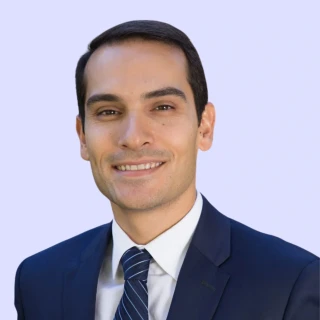
George Serafeim
Charles M. Williams Prof. of Business Administration, Harvard
George Serafeim is the Charles M. Williams Professor of Business Administration at Harvard Business School. He co-leads a Lab, within Harvard's Digital, Data, Design Institute, and serves on the faculty steering committee of Harvard University's Salata Institute. He teaches Financial Statement Analysis, Management Control Systems, and Corporate Governance in the Executive Education General Management Program. In the MBA program, he teaches the first-year required courses on Financial Reporting and Control and Purpose of the Firm. In addition, Professor Serafeim teaches in Harvard Business School’s custom executive education programs for senior executives.
Previously, he taught and designed award-winning courses on the energy transition, circular economy technologies, and the role of business in society, writing more than 40 case studies for those courses. Moreover, he created the Impact-Weighted Accounts Project that produced methodologies, large datasets, and dozens of projects on impact accounting and valuation. He has presented his research in over 60 countries around the world and ranks among the most popular authors on the Social Science Research Network. His book "Purpose and Profit: How Business Can Lift Up the World" explores the challenges and opportunities in building and sustaining high performance purpose-driven organizations that have a measurable positive impact on society. Professor Serafeim’s widely cited research spans the fields of accounting, finance, management, and strategy, and has been published in prestigious academic and practitioner journals. Most recently, he led a research project using Generative AI to study the diffusion and consequences of technologies that drive the energy transition and efficient use of resources, such as electric vehicles, batteries, and recycled materials. Over the years, his research has focused on measuring, analyzing, driving, and communicating corporate performance. He has received multiple recognitions, including the Greenhill Award for outstanding contributions to the HBS community, the Pericles Leadership Award in recognition of services to the Hellenic Republic, the Kim B. Clark Fellowship on Responsible Leadership from University of Oxford, the Dr. Richard A. Crowell Memorial Prize, the JIBS Decade Award, and twice the Graham and Dodd Scroll Award. Professor Serafeim has held several positions of leadership. He serves on the board of directors of Liberty Mutual, a Fortune 100 company, on the board of the International Foundation for Valuing Impacts (IFVI), and on the advisory boards of leading investment firms. He has been an investor and advisor to several start-ups over the years. Previously, he co-founded an advisory services firm, served on the board of directors of a leading operations consulting firm, and on the board of directors of a publicly listed investment company. He has played an active role in shaping corporate governance standards as a member of the steering committee of the Athens Exchange Group, overseeing both stock and bond exchanges, and as Chairman of Greece’s Corporate Governance Council, issuing a new corporate governance code to enhance governance practices, investor protection, and business performance. He has contributed in advancing corporate governance globally, having served on the inaugural Standards Council of SASB, which created standards for investor relevant information adopted by thousands of leading companies around the world, and on the Taskforce Working Group on Impact Transparency, Integrity and Reporting established by the UK's Presidency of the G7. He served on a panel, established by the state of New York, to advise one of the largest pension funds on a strategic framework to identify, assess and manage investment risks and opportunities from the energy transition. Professor Serafeim earned his doctorate in business administration at Harvard Business School, where his doctoral dissertation was recognized with the Wyss Award for excellence in research. He received a master's degree in accounting and finance from the London School of Economics and Political Science, where he was awarded the Emeritus Professors’ Prize for best academic performance. He grew up in Athens, Greece.

Katherine Bruce
ESG Reporting Lead, Emirates Group
Katherine manages ESG risk in the Emirates Group's finance department in Dubai. Her focus is evaluating sustainability-related financial risk and building awareness of sustainable practices in aviation. Before Emirates, she was Sustainability & Climate Change lead for WSP in the Middle East, where she advised on net-zero pathways, ESG reporting and climate resilience. That work covered real estate, energy, infrastructure and finance, and included a secondment to Mubadala to build ESG into its investment portfolio. She holds master's degrees in Engineering for Sustainable Development from the University of Cambridge and in Chemical Engineering from Heriot-Watt University.

Raven Adams
Director of Sustainability, Granite Construction
Raven Adams leads the Sustainability program at Granite Construction, one of the largest civil infrastructure companies in the United States. Recognized by the United Nations Global Compact Network USA as the 2023 USA SDG Pioneer for Large and Multi-National Companies, Adams is responsible for sustainability strategic planning, stakeholder engagement, and corporate reporting. Adams received her BA in Psychology and Neuroscience from Colby College and her JD from the University of Denver Sturm College of Law, where she focused on environmental and natural resources law.

Emily U. Smith
VP, Corporate Responsibility, Park Hotels & Resorts
Emily serves as Vice President of Corporate Responsibility for Park Hotels & Resorts, a publicly traded lodging real estate investment trust with 30 premium-branded hotels and resorts with over 21,000 rooms located in prime US markets. In this role, Emily oversees Park's risk management and ESG strategies and initiatives, including insurance, climate risk and resiliency and ESG data reporting. Emily has been with Park since the Company's founding in 2017 as a spin-off from Hilton.

Laurent Lhopitallier
Head of ESG Performance, Sanofi
Laurent leads ESG performance at Sanofi. He joined the company in 2013 and has held several roles in its sustainability function, including Director of CSR for Sanofi France. Before Sanofi, he spent more than a decade as a sustainability consultant at major professional services firms. Since 2018 he has also taught sustainability to Master's in Finance students at CNAM in Paris.
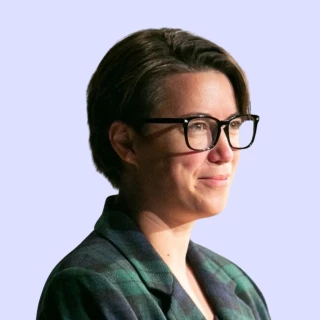
Jennifer Turliuk
President, Koru Labs
Jennifer Turliuk focuses on environmental and AI governance through advocacy, research, education, and innovation. She is President of Koru Labs, which helps mission-driven organizations and leaders turn climate and AI challenges into measurable, ethical impact. Jennifer has lectured about climate and AI through appointments as Short Term Lecturer at MIT, Executive Fellow at Harvard Business School, and Preceptor of the Google Data Center Community AI Fellowship. She speaks at global forums including Davos, COP, TEDx, and UN groups. Jennifer has worked in law and policy advocacy with Our Children's Trust, Indigenous Climate Action, and Samuelson-Glushko Canadian Internet Policy and Public Interest Clinic (CIPPIC). She was Practice Leader of Climate & Energy AI at MIT's entrepreneurship center, where she built, researched, and taught AI and climate solutions. Previously, she co-founded a STEM education startup and exited through acquisition, and was partner at one of the world's most active climate tech funders. Her work has been featured in The New York Times, Forbes, and Wired, and she has received an IEEE Outreach Award and an honorary degree from Humber College. She holds a Master's from MIT - where she wrote her thesis on the net climate impact of AI - and a Bachelor's degree from Queen's University. She has completed executive education at Harvard Kennedy School and Singularity University at NASA Ames.

Deanna Mirlycourtois
Director, Sustainability Reporting & Engagement, Definity
Deanna Mirlycourtois is Director, Sustainability Reporting &; Engagement at Definity, where she leads external sustainability reporting and related stakeholder engagement initiatives. With more than a decade of experience in sustainability strategy, impact measurement, risk management, and corporate reporting, she helps organizations strengthen transparency, build stakeholder trust, and create long-term value. Her experience includes climate strategy and decarbonization, climate risk management, greenhouse gas accounting, and climate-related disclosures. Prior to joining Definity, she led sustainability strategy and disclosures for a publicly traded Canadian company and advised corporations on sustainability and social impact matters at Deloitte.
Deanna holds a Bachelor of Commerce (Honours) from the University of Manitoba and a Master of Arts in International Affairs from Carleton University.

Sam King
Chief Operating Officer, GIST
Sam is a Chief Commercial Officer – Corporate at GIST Impact, which provides impact data and analytics, and is based in Bristol, UK. Before GIST, he was a consultant focused on sustainability and strategy at Deloitte, Deloitte Digital and Kearney.
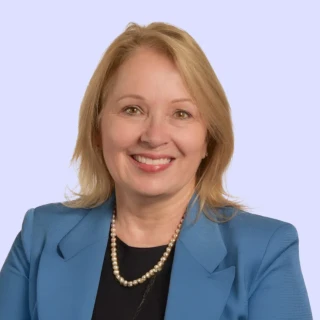
Amy Betts
SVP, Strategic Impact Director, Columbia Bank
Amy has led enterprise-wide ESG and DEI strategy at Umpqua Bank and Columbia Banking System since March 2023. From 2011 to 2023 she was SVP of Corporate Analysis & Reporting, Investor Relations and ESG at Columbia Banking System. Before that, she spent more than a decade in finance and reporting roles at Russell Investments. She holds a BBA from Pacific Lutheran University and is based in Tacoma, Washington.

Maryse Lemay
Dir., Responsabilité sociétale de l’entreprise (RSE), Boralex
Maryse sets Boralex's company-wide CSR strategy across its North American and European business units. Before Boralex, she spent 11 years at Énergir, ending as Chief of Sustainable Development and Community Engagement. There she led the company's first sustainability report in 2014, which earned GRI's "Materiality Matters Check," and drove its ESG integration work. She has also lectured on organizational sustainability at Université de Sherbrooke since 2018. She holds a Master's in Environment (Sherbrooke), a DESS in Sustainable Development Management (HEC Montréal) and a BA in Public Relations (UQAM).
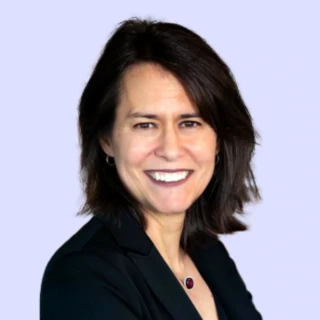
Catherine Goyer
Dir., Corporate Responsibility & Environnement, Bell
Catherine leads Bell's environmental sustainability strategy from Montreal, with a focus on how digital technology can support decarbonization. Under her leadership, Bell beat its GHG intensity target by 15% and cut emissions per unit of network usage by 55% between 2019 and 2021. Bell has also committed to carbon-neutral operations and to science-based absolute GHG reductions by 2030. Her work on circularity includes banning single-use plastics, recovering 2.5 million devices from customers and reaching 63% waste diversion. She was named a Clean50 honouree in 2023.
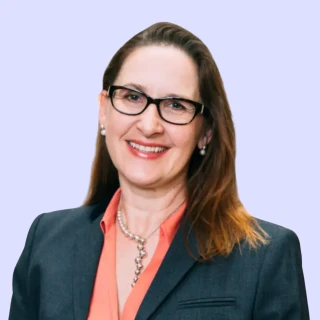
Lisa Ann Cairns
Vice President of Sustainability and Learning & Development, Smith
Lisa leads Sustainability and Learning & Development across Smith's global offices, operations and distribution hubs. She began her role as Director of Learning & Development in 2017 and launched Smith University, the company's e-learning platform. Since 2023 she has been building a skills-development platform that uses AI and machine learning to tailor learning to each employee. In addition to leading the Learning & Development department, Lisa provides executive oversight of Smith's sustainability program, including governance, strategy, ESG disclosures, companywide sustainability performance targets, and stakeholder engagement. Under her leadership, Smith continues to strengthen the integration of sustainability considerations into business planning, customer engagement, risk management, and operational decision-making. Before 2017, she held leadership roles at Smith and the Smith-affiliated companies ZettaWorks and ONTILITY. Prior to Smith, she taught linguistic anthropology at Texas A&M, the University of Michigan, Northwestern, and the University of Chicago. She holds a PhD and MA in linguistics from the University of Chicago and a bachelor's from Hofstra University.
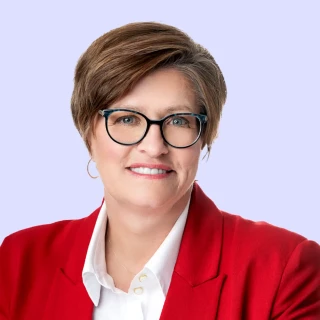
Milla Craig
Founder & President, Millani
Milla founded Millani in 2008. It's an independent advisory firm that helps investors build ESG factors into their investment decisions. Before that, she spent over 15 years in institutional equity sales at RBC Dominion Securities and Scotia Capital, then led sustainability at Deloitte's Quebec office. She sits on the board of the Responsible Investment Association and co-chairs Finance Montréal's Finance and Sustainability Initiative steering committee. She won a Clean16 award in 2017. She holds a BBA from Mount Saint Vincent University and the Sustainable Investment Professional Certification from Concordia's John Molson School of Business.
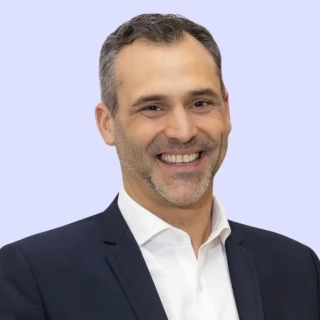
Daniel Charron
Vice-Chair, CSSB
Daniel has led engagement, sustainability and public affairs at Fondaction since 2020. He is also Vice Chair of the Canadian Sustainability Standards Board (CSSB). Earlier, he was President and CEO of Manufacturiers et Exportateurs du Québec. He then co-founded the public affairs firm Octane Stratégies and ran it for more than a decade until NATIONAL Public Relations acquired it in 2018. After that, he was a Senior VP at NATIONAL and then President and CEO of Réseau Capital. He sits on several boards, including Montreal Climate Partnership and Fondation Arbour. He holds a PhD in International Political Economy from Sciences Po Paris, an MSc from Université de Montréal and a BBA from HEC Montréal.
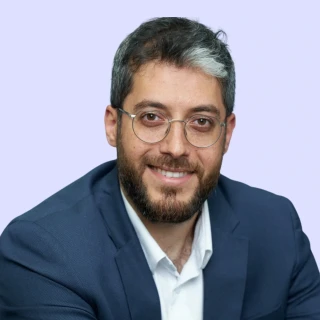
Omar Monajjed
Head of Sustainability, Nexans
Omar Monajjed is Group ESG Director at Nexans, with nearly 20 years of experience in the cable industry across Europe and the Middle East.
He has held diverse operational and functional roles spanning industrial performance, quality, safety, environment, and sustainability, and has led business transformations in complex environments.
At Nexans, he drives the ESG strategy, including decarbonization, ESG data digitalization, and alignment with emerging regulations such as CSRD, supporting the company's ambition to combine performance with responsibility.

David Vilder
ESG Director, Aya Gold
David leads ESG at Aya Gold & Silver and is based in Montreal. He joined Aya in 2020 and has held its HSEC Manager and ESG Manager roles. Before that, he was Manager of Corporate Social Responsibility at SRG Mining and HSEC Manager at Windiga Energy. His experience covers environmental and social impact assessment, health and safety, and community relations in mining and energy, mostly in Africa.

Sacha Weksler
Sustainability Lead, NanoXplore
Sacha is Sustainability Lead at NanoXplore Inc., a Montréal-based, publicly traded producer of graphene and graphene-enhanced materials with 12 plants across North America and Europe. He built the company's sustainability function from the ground up, leading its first sustainability risk assessment, double materiality assessment, and sustainability report under the GRI Standards.
His current work focuses on leading the implementation of NanoXplore's sustainability strategy as the company grows: strengthening Scope 1 & 2 data across its plants and developing its Scope 3 approach, with supplier engagement as the entry point for measuring value-chain emissions.
He holds a Master's in Management & Sustainability from HEC Montréal, where he laid the groundwork for NanoXplore's first sustainability report, and a Bachelor's in International Business from EPHEC Brussels.

Mike MacIntyre
Head of Product Management

Ollie Onslow
Sustainability expert
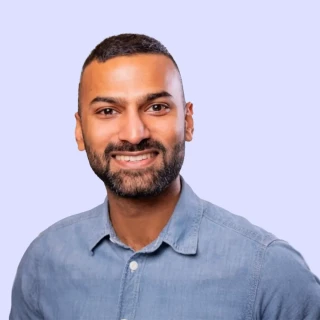
Rajiv Jalim
Global Director of Sustainability Solutions
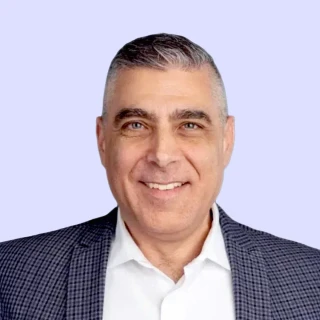
Frank Arcadi
Chief Product Officer

Charles Assaf
CEO & Founder, Novisto